- par Oliver Harwood
What Makes Soapstone So Easy to Carve?
- par Oliver Harwood
When people first try carving soapstone, they’re often surprised by how smooth and effortless it feels compared to other sculpting materials. Soapstone has been used for thousands of years by artists and craftspeople, and today it remains one of the most beginner-friendly carving stones available.
... But what exactly makes it so easy and enjoyable to work with?
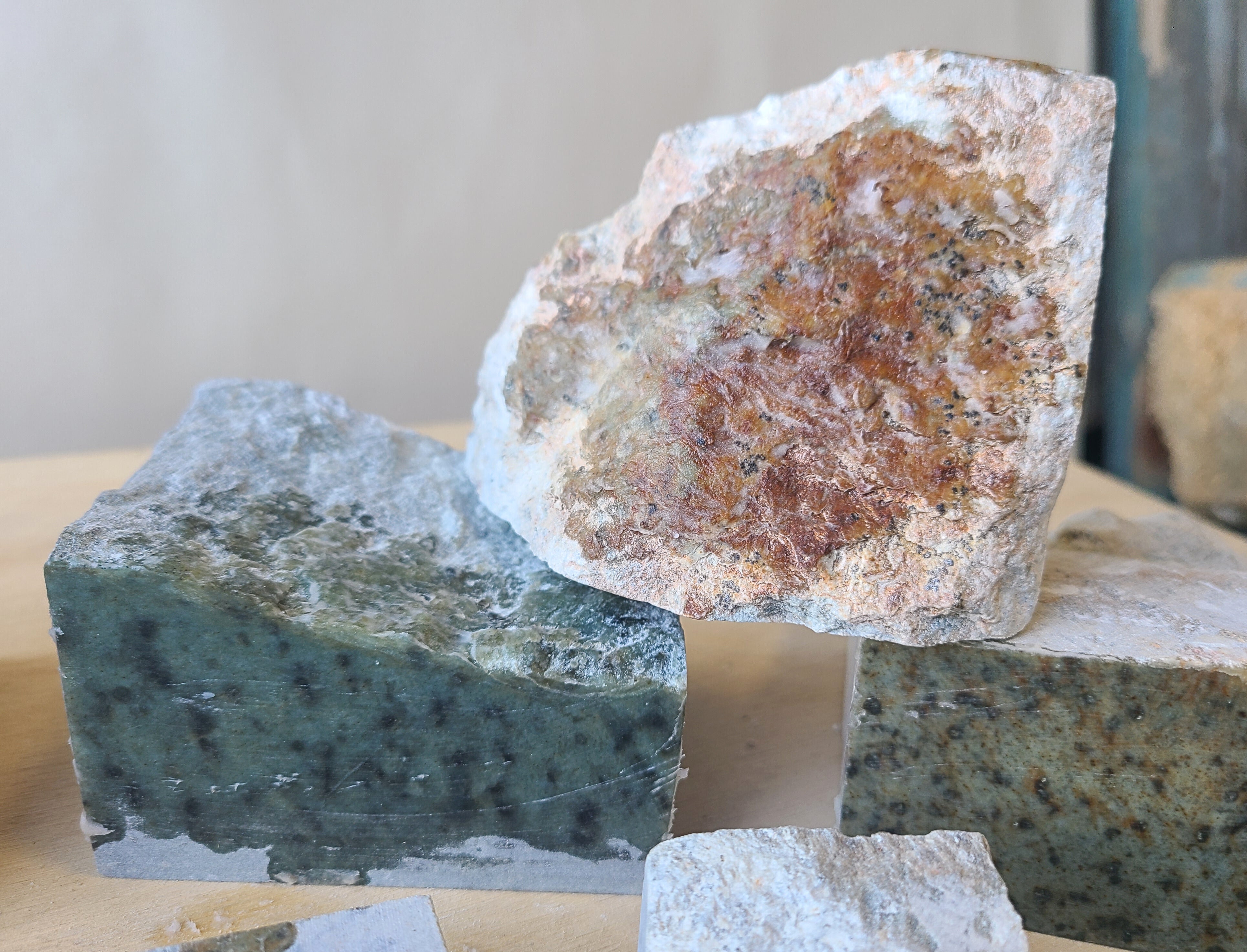
Soapstone is a metamorphic rock rich in talc—the softest mineral on the Mohs hardness scale. This natural softness is what gives the stone its silky, “soapy” texture and allows carvers to shape it using simple hand tools. Unlike harder stones such as alabaster or marble, soapstone doesn’t require chisels, mallets, or heavy force. A rasp, file, and some sandpaper are all you need to transform it into a sculpture.
One of the biggest advantages of soapstone is its predictable behaviour under tools. Instead of chipping or fracturing, the stone wears down in smooth, even layers. This makes it an ideal material for beginners, students, and anyone learning the basics of form and symmetry. Carvers can refine details gradually, correct small mistakes, and experiment with shapes without worrying about the stone breaking.
After carving, soapstone becomes wonderfully smooth with just a few stages of sanding. As you move from coarse to fine grits, the stone begins to reveal its natural colour and patterning—greens, greys, browns, creams, or soft mottling depending on the source. This transformation is one of the most rewarding parts of the process, especially for first-time carvers who get to see their sculpture come to life.
When worked with a small amount of water or on a damp surface, soapstone dust stays controlled and easy to clean. This makes it practical for classrooms, community art programs, and at-home carving sessions. Paired with simple safety measures like washing hands after carving, it becomes a low-mess, accessible material for all ages.
Because soapstone responds so gently to carving tools, learners can focus on creativity rather than struggling with hard material. It’s perfect for teaching 3D thinking, refining fine motor skills, and introducing sculptural design. With just a little patience and step-by-step shaping, anyone can create a piece they’re proud of—whether it’s an animal figure, pendant, or abstract form.
The finishing step is where soapstone truly shines. A light coat of wax brings out deep, vibrant colours and gives the sculpture a soft satin glow. This reveal moment is always exciting and often surprising, making the whole process feel even more rewarding.
Whether you’re a first-time crafter, a teacher planning a hands-on activity, or a hobbyist looking for a relaxing project, soapstone is a beautiful and approachable material that invites exploration. Its softness, predictability, and natural beauty make it an ideal starting point for anyone wanting to carve for the first time.
Share:
All About Stone